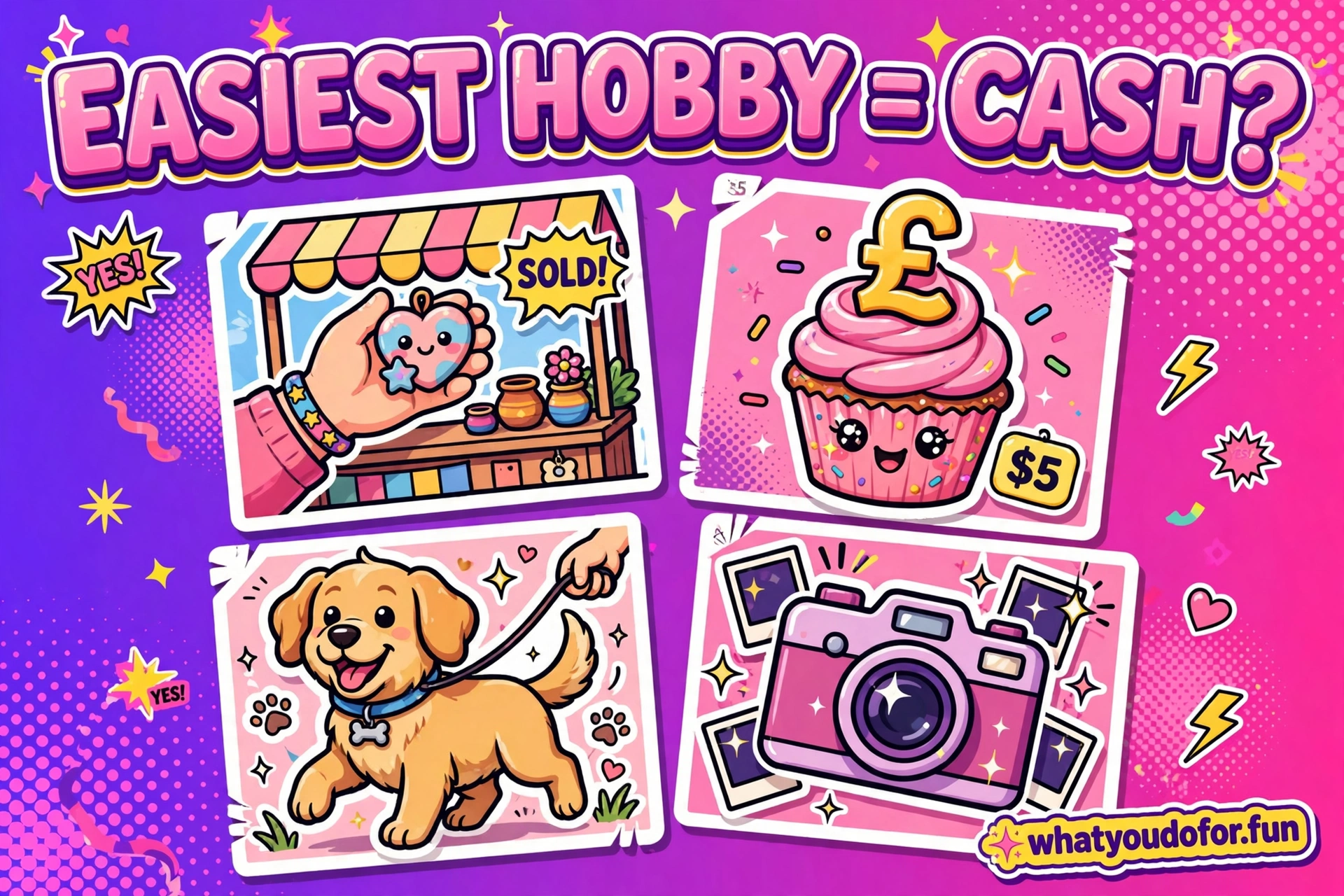
What Is the Easiest Hobby to Make Money From? 12 Realistic Picks
The easiest hobby to make money from is the one you already do well. If you bake every weekend, garden every spring or take photos on every walk, you are closer to paid than someone starting from zero. There is no single easiest hobby for everyone, because ease depends on the skills you already have, the kit already in your cupboards and the people already around you. What follows are 12 realistic, low cost picks, grouped by how they earn, each with a cheap way to start.
Ranked by ease: the quick list
Honest caveat first. No honest ranking can name one winner for everybody, because the easiest money comes from matching the hobby to what you already know. That said, if we rank by startup cost and speed to first sale, the order looks roughly like this:
- Pet sitting and dog walking. If you already love animals, you can start this weekend.
- Flipping thrift finds. Start with things you already own.
- Odd jobs and task help. Your existing DIY skills, sold by the hour.
- Tutoring. A subject you already know, taught one to one.
- Freelance writing. Free to start if you own a laptop.
- Selling digital printables. Make it once, sell it many times.
- Renting out hobby gear. Your camera or instruments earn while you sleep.
- Music lessons. If you already play, teaching is the natural next step.
- Home baking. Cheap ingredients, but food rules apply.
- Selling handmade crafts. Lovely, but materials cost money upfront.
- Growing and selling plants. Slow, seasonal, but nearly free to start.
- Stock photography. Easy to start, slow to build into real income.
The rest of this article explains each pick in detail. If you are still choosing which hobby to commit to, our guide to cheap hobbies to start is a good place to begin, and the 3 hobby rule keeps you from collecting expensive half finished projects.
Hobbies where you sell what you make
1. Selling digital printables
What it is: Planners, wall art, party invitations, budget trackers and checklists sold as downloadable files. You design the file once and customers download it as many times as it sells.
Why it can make money: There are no materials to buy and no parcels to post, so almost every sale is profit after the marketplace takes its cut. Marketplaces charge listing and transaction fees, so check the current fee schedule before you price anything.
How to start cheaply: Use a free design tool, make ten simple designs in one niche (wedding planners sell better than random one offs), and list them on a handmade marketplace such as Folksy. Your only cost is your time and the listing fees.
2. Selling handmade crafts
What it is: Knitted scarves, handmade jewellery, candles, soaps, pottery and other things made by your hands.
Why it can make money: Buyers pay a premium for handmade and personalised items, especially around gift giving seasons. A craft you already do for fun already has its startup costs behind you.
How to start cheaply: Sell what you already make rather than learning a new craft from scratch. List a small batch on Folksy or Not On The High Street, price in your materials and time, and reinvest early profits into more supplies.
3. Home baking
What it is: Cakes, brownies, cookies and celebration bakes made in your own kitchen and sold to neighbours, colleagues or local cafes.
Why it can make money: Ingredients are cheap relative to what people will pay for a beautiful homemade cake, and celebration baking has steady demand all year round.
How to start cheaply: Start with one signature bake you already make well. Before you sell a single slice, register your food business with your local council through GOV.UK, which is free, and follow basic food hygiene rules. A few food safe boxes and a social media page are the only other things you need.
4. Selling stock photography
What it is: Uploading your photos to stock libraries, which license them to designers, bloggers and businesses.
Why it can make money: Once a photo is accepted, it can sell repeatedly for years with no extra work. Photos of everyday life, workplaces and local scenes are in constant demand.
How to start cheaply: Your phone camera is enough to begin. Open a free contributor account with Adobe Stock or Shutterstock, upload your best fifty photos, and learn what sells from the libraries’ own contributor guides. Treat it as a slow burn, not a quick win.
Hobbies where you sell a skill you already have
5. Tutoring
What it is: Teaching a subject you know well, from school maths to guitar theory to conversational French, in person or over video call.
Why it can make money: Parents and adult learners pay for patient, reliable one to one help, and you need no qualifications beyond genuinely knowing your subject for most casual tutoring.
How to start cheaply: List yourself on a tutoring platform such as MyTutor or GoStudent, or simply tell your local parent groups. A laptop, a webcam and a quiet room are the whole setup.
6. Freelance writing and design
What it is: Writing blog posts, product descriptions and newsletters, or designing logos and social media graphics, for clients who find you on freelance marketplaces.
Why it can make money: Every business needs words and images, and marketplaces bring the clients to you. If you already write or draw for fun, the only new skill is learning to take a brief.
How to start cheaply: Create a free profile on Fiverr, write three sample pieces or design three sample graphics, and start with small jobs to collect reviews. Your startup cost is zero if you already own a computer.
7. Teaching music
What it is: Giving beginner lessons on the instrument you already play, at home or online.
Why it can make money: Beginner lessons are the most in demand kind, and you do not need to be a concert performer to teach someone their first chords. Parents value a friendly local teacher enormously.
How to start cheaply: List your services on MusicTeachers.co.uk or your neighbourhood noticeboard, offer a trial lesson, and teach from your own living room. Your instrument is the only equipment you need.
8. Pet sitting and dog walking
What it is: Looking after other people’s pets in your home or theirs, or walking dogs while their owners work.
Why it can make money: Pet owners pay well for someone trustworthy, and demand peaks exactly when you are likely free: weekends and holidays. If animals already make you happy, this barely feels like work.
How to start cheaply: Join a pet care marketplace like Rover or TrustedHousesitters, complete the profile and background checks, and start with friends’ pets to gather reviews. Sturdy shoes are your main business expense.
Hobbies where you sell things you already own
9. Flipping thrift and vintage finds
What it is: Buying undervalued items at charity shops, car boot sales and flea markets, then reselling them online for more.
Why it can make money: Charity shops price to clear, not to maximise, so a good eye for brands, vintage and collectables can turn a Saturday rummage into real profit. This is treasure hunting that pays for itself.
How to start cheaply: Start by selling things you already own and no longer want on Vinted, Depop or eBay. Once you know what sells, spend a small fixed budget per charity shop trip and never more.
10. Growing and selling plants
What it is: Propagating houseplants, growing seedlings or dividing perennials, then selling the extras.
Why it can make money: One healthy mother plant can produce dozens of cuttings, and plant lovers happily pay for well rooted specimens. Your costs are soil, pots and patience.
How to start cheaply: Propagate what you already grow on your windowsill. Sell locally through community groups or list on the same marketplaces as your thrift flips. It is seasonal and slow, so treat it as pocket money with leaves.
11. Odd jobs and task help
What it is: Flat pack assembly, minor repairs, gardening help, moving assistance and other small jobs booked through task marketplaces.
Why it can make money: Plenty of people will gladly pay to skip the jobs they hate or cannot do. If DIY is your hobby, you already own the tools and the know how.
How to start cheaply: Sign up on TaskRabbit, list the tasks you genuinely enjoy, and let reviews build your profile. Your existing toolbox is your startup capital.
12. Renting out hobby gear
What it is: Lending out your camera, instruments, camping kit, power tools or party equipment to people who need them for a day or a weekend.
Why it can make money: Expensive hobby equipment sits unused most of the year. Renting it out turns idle kit into income without selling anything you love.
How to start cheaply: List items you already own on Fat Llama, photograph them well, and set clear pickup terms. It costs nothing to list, and you keep the gear.
A quick word on tax
This is not tax advice, just a useful landmark. In the UK, the trading allowance means the first £1,000 of trading income per tax year is tax free, and you do not usually need to tell HMRC about it. The allowance applies to your gross income across all your side activities combined, not to each one separately, so if you cross £1,000 in total you should register and report it properly. Keep simple records from day one, whatever you earn.
How to pick your one
If twelve options feel like eleven too many, narrow it down with three questions. What do you already do every week without being asked? What do friends already ask you for help with? And which of the lists above made you think, I could do that tomorrow? Start with the overlap. And if you are tempted to start three at once, read our guide to juggling multiple hobbies without burnout first. One profitable hobby beats three abandoned ones.
Frequently asked questions
What is the easiest hobby to make money from with no skills?
Pet sitting and flipping items you already own need the least specialist skill. Both rely on reliability and a good eye rather than training, and both can start this week with platforms like Rover or Vinted.
What hobby makes money the fastest?
Service hobbies pay fastest because there is nothing to make or list first. Dog walking, odd jobs and tutoring can all bring in your first payment within days, while selling crafts or stock photos takes longer to build.
Do I need to pay tax on hobby income in the UK?
It depends on how much you make. The UK trading allowance covers the first £1,000 of trading income per tax year, and you do not usually need to tell HMRC about income within it. Above that, you need to register and report it. This is general information, not tax advice.
Can I sell handmade items without setting up a business?
Yes, for small scale selling you can simply start. Marketplaces like Folksy let individuals open a shop without forming a company. Once your sales grow past casual levels, registering as a sole trader keeps things tidy.
What is the cheapest hobby to start that can make money?
Freelance writing and digital printables cost nothing beyond a computer you already own. Flipping starts free too if your first listings are things already in your home.
Should I turn my favourite hobby into a side hustle?
Only if the money part sounds fun too. Selling can change how a hobby feels, so keep one hobby purely for joy. The 3 hobby rule is a handy framework: one hobby to make money, one to keep you fit, one to keep you creative.
Sources
- GOV.UK: Tax-free allowances on property and trading income (trading allowance of £1,000 per tax year)
- GOV.UK: Register a food business (registering with your local council before selling food)
- Folksy (UK marketplace for handmade items and craft supplies)
- Not On The High Street: Sell with us (selling handmade and personalised goods)
- Adobe Stock Contributor (selling stock photos)
- Shutterstock Contributor (selling stock photos)
- MyTutor (online tutoring marketplace)
- GoStudent UK (online tutoring marketplace)
- Fiverr (freelance services marketplace)
- MusicTeachers.co.uk (finding and listing music teachers)
- Rover (pet sitting and dog walking marketplace)
- TrustedHousesitters (pet sitting community)
- Vinted UK (reselling pre-loved items)
- Depop (reselling fashion and vintage)
- eBay UK: Start selling (online selling)
- TaskRabbit UK (odd jobs and task services)
- Fat Llama (renting out personal equipment)

Related Posts
Why Do My Weekends Feel So Short?
What Is the 2-2-2 Rule for Couples?